For 182 years we, the Advent people, have held as present truth the fact that our precious Savior, Jesus, entered into the Most Holy Place of the Sanctuary in heaven, on the Biblical holy day called the Day of Atonement, on October 22, 1844. This understanding of the Heavenly Sanctuary, peculiar to Seventh-Day Adventists, has opened to us the marvelous treasures of God's knowledge, enabling us to better esteem the Plan of Salvation, to know our present condition in the stream of time, and to optimally prepare for what's coming upon the world, as we help others prepare themselves.
However, there is a caveat that's suspiciously overlooked: this very foundational SDA doctrine — without which all our consistency would fall apart — is dependent on a way of reckoning time that's very different from the Gregorian calendar which most people use today. Without a deep study of the Jewsih economy, including the Biblical calendar, it's impossible to check and defend this doctrine without making use of the Spirit of Prophecy and relying on opinions of men. But what if this Biblical calendar, not only was used by Jesus up to 1844, but is still relevant for Him and for us in 2026?
God's Statutes Bring New Light
Sister White says that it is present truth that the flock needs now.
As we're entering the final movements of this earth's history, we have to be endowed with special light, as a people, in order to be capable to give the most spectacular message the world has yet witnessed. To the question whether the Lord has any more light for us as a people, inspiration replies:
The question has been asked me, “Do you think that the Lord has any more light for us as a people?” I answer that he has light that is new to us, and yet it is precious old light that is to shine forth from the word of truth. We have only the glimmerings of the rays of the light that is yet to come to us. We are not making the most of the light which the Lord has already given us, and thus we fail to receive the increased light; we do not walk in light already shed upon us. {RH June 3, 1890, par. 2}
Notice that the above quote is written two years after 1888. Two years after Jones and Waggoner introduced the message of Righteousness by Faith at Minneapolis, the messenger of the Lord says that we only have few rays of truth, because we didn't properly use the light already given. Had the message of Jones and Waggoner been accepted, fresh truths regarding the law of God would have been provided us, since righteousness is obedience to the law. The last commandment of the Old Testament distinctly says:
Remember ye the law of Moses my servant, which I commanded unto him in Horeb for all Israel, with the statutes and judgments. {Malachi 4:4}
When a commandment from God begins with remember,
you know the object which it's referring to is prone to be forgotten and trampled upon. From the pulpits, men have declared that the law of Moses is done away with at the cross. Jesus' opinion differs:
On the mount, Jesus was closely watched by spies; and as He unfolded the principles of righteousness, the Pharisees caused it to be whispered about that His teaching was in opposition to the precepts that God had given from Sinai. The Saviour said nothing to unsettle faith in the religion and institutions that had been given through Moses; for every ray of divine light that Israel’s great leader communicated to his people was received from Christ. While many are saying in their hearts that He has come to do away with the law, Jesus in unmistakable language reveals His attitude toward the divine statutes. “Think not,” He said, “that I am come to destroy the law, or the prophets.” {MB 47.1}
[...] What is the will of the Father? That we keep his commandments. Christ, to enforce the will of his Father, became the author of the statutes and precepts given through Moses to the people of God. Christians who extol Christ, but array themselves against the law governing the Jewish church, array Christ against Christ. {RH May 6, 1875, par. 16}
[...] How many pass over these words of Moses as though they were meaningless, and continue to heap reproach and derision on divine institutions. How many trample on the divine law, the righteous judgments and statutes which were committed to God’s ancient people. {ST August 25, 1887, par. 2}
Here inspiration puts into close relationship the words precepts, statutes, commandments and divine institutions. Also, the remember
part of Malachi 4:4, seen in its context in the Bible, alludes to a future restoration of God's stautes, just prior to the Second Coming of Jesus. Inspiration confirms this idea:
In the time of the end every divine institution is to be restored. [...] {PK 678.2}
Throughout the Spirit of Prophecy, marriage, the feasts and, in particular, the the Sabbath, are referred to as divine or sacred institutions. Jehovah says that true marriage, the Sabbath and God's feasts will all be restored! And not only that, but He promises to the saints living in this gathering time that they will observe and do His statutes:
And say unto them, Thus saith the Lord GOD; Behold, I will take the children of Israel from among the heathen, whither they be gone, and will gather them on every side, and bring them into their own land [...] And David my servant shall be king over them; and they all shall have one shepherd: they shall also walk in my judgments, and observe my statutes, and do them. {Ezekiel 37:21,24}
These statutes are new light which, as the prophetess puts it, is really precious old light.
The feasts of Jehovah are truly old. You'll learn from the Bible that Joseph, the son of Israel, kept the new moon feast in Egypt, long before the law was given to Moses at Sinai. You'll find out in the Bible that Jesus gave us a hint that He Himself may keep the Passover after it be fulfilled in the kingom of heaven. A proper appreciation of the Biblical statutes would be impossible without a deep study on God's calendar. That's precisely what we're going to do over the next articles on this subject.
Now, our purpose in studying God's calendar is, primarily, to find out how to obey the law of God. A mere intellectual exercise done just to satisfy a curiosity will be of no help to you. It is true that a knowledge of these things enables us to better understand the Plan of Salvation and the sequence of final events prior to the Second Coming of Jesus. However, the Holy Ghost will open the full truth only to those who are willing to obey all the light that He is giving them.
Many shall be purified, and made white, and tried; but the wicked shall do wickedly: and none of the wicked shall understand; but the wise shall understand. {Daniel 12:10}
I pray that you'll be called to be among the wise. May the Holy Spirit guide you as you study this!
The Feasts of Jehovah are Eternal Statutes
The first reference to God's appointed times is found in Genesis 1:14.
And God said, Let there be lights in the firmament of the heaven to divide the day from the night; and let them be for signs, and for seasons, and for days, and years {Genesis 1:14}
The word seasons here is, in Hebrew, מֹעֲדִים (moadim). The singular of "moadim" is "moed". Other variants you'll find are "moade" and "moaday". "Moed" has more meanings: appointed time, congregation, and others. Here, in Genesis 1:14, we interpret "moedim" (seasons) as appointed times. The word seasons here refers to "times." It can't refer to the four seasons of the year (spring, summer, autumn, winter), because it's the sun that regulates the four seasons; but Psalm 104:19 says that it's the moon that's appointed for the seasons:
He appointed the moon for seasons : the sun knoweth his going down. {Psalm 104:19}
So, God appointed the sun, the moon and the stars to tell us His appointed times (moadim). The most sacred appointed times in the Bible are: the Sabbath, the new moons, God's holy days and the years of release. The chapters in the Bible that are most devoted to the subject of appointed times are chapters 23 and 25 of Leviticus.
And the LORD spake unto Moses, saying, Speak unto the children of Israel, and say unto them, Concerning the feasts of the LORD , which ye shall proclaim to be holy convocations, even these are my feasts . {Leviticus 23:1,2}
Four times in Leviticus 23, Moses writes the feasts of Jehovah,
and one time God says my feasts.
Inspiration says that the Lord does not repeat things that are of no great consequence.
Moreover, while laying down this law, the Lord also mentions that these feasts will be a statute forever
for the generations of the children of Israel. We're in the generations of the children of Israel. The generations of the children of Israel last forever. God's law also lasts forever.
And the LORD commanded us to do all these statutes, to fear the LORD our God, for our good always, that he might preserve us alive, as it is at this day. {Deuteronomy 6:24}
Therefore thou shalt love the LORD thy God, and keep his charge, and his statutes, and his judgments, and his commandments, alway. {Deuteronomy 11:1}
I have inclined mine heart to perform thy statutes alway, even unto the end. {Psalm 119:112}
God's statutes were never abolished. One misconception is that these laws "were for the Jews." We protest against this misinterpretation of the Scriptures. They were spoken to the children of Israel at Sinai, but addressed to the whole world. The children of Israel are now all over the world anyway.
[...] the very fact that the desert of Sinai, and not Palestine, was the place selected by him in which to proclaim his law, reveals that he intended it for all mankind. [...] {RH August 30, 1898, par. 11}
In consequence of continual transgression, the moral law was repeated in awful grandeur from Sinai. Christ gave to Moses religious precepts which were to govern the everyday life. These statutes were explicitly given to guard the ten commandments. They were not shadowy types to pass away with the death of Christ. They were to be binding upon man in every age as long as time should last. These commands were enforced by the power of the moral law, and they clearly and definitely explained that law. {RH May 6, 1875, par. 10}
Then, what laws of Moses are in vigor today and what are not? Let the messenger of the Lord explain this subject:
God’s people, whom he calls his peculiar treasure, were privileged with a two-fold system of law; the moral and the ceremonial. The one, pointing back to creation to keep in remembrance the living God who made the world, whose claims are binding upon all men in every dispensation, and which will exist through all time and eternity. The other, given because of man’s transgression of the moral law, the obedience to which consisted in sacrifices and offerings pointing to the future redemption. Each is clear and distinct from the other. From the creation the moral law was an essential part of God’s divine plan, and was as unchangeable as himself. The ceremonial law was to answer a particular purpose of Christ’s plan for the salvation of the race. The typical system of sacrifices and offerings was established that through these services the sinner might discern the great offering, Christ. But the Jews were so blinded by pride and sin that but few of them could see farther than the death of beasts as an atonement for sin; and when Christ, whom these offerings prefigured, came, they could not discern him. The ceremonial law was glorious; it was the provision made by Jesus Christ in counsel with his Father, to aid in the salvation of the race. The whole arrangement of the typical system was founded on Christ. Adam saw Christ prefigured in the innocent beast suffering the penalty of his transgression of Jehovah’s law.
The law of types reached forward to Christ. All hope and faith centered in Christ until type reached its antitype in his death. [...] {RH May 6, 1875, par. 4,5}
There is a law which was abolished, which Christ “took out of the way, nailing it to His cross.” Paul calls it “the law of commandments contained in ordinances.” This ceremonial law, given by God through Moses, with its sacrifices and ordinances, was to be binding upon the Hebrews until type met antitype in the death of Christ as the Lamb of God to take away the sin of the world. Then all the sacrificial offerings and services were to be abolished. Paul and the other apostles laboured to show this, and resolutely withstood those Judaizing teachers who declared that Christians ought to observe the ceremonial law. {BEcho April 16, 1894, par. 2}
If we also read Daniel 9:27, it's clear that what Jesus put an end to was the sacrifice and the oblation. Those are ceremonial laws. That's all it was abolished at the cross. We conclude that the feasts, along with many other statutes are moral laws, and not ceremonial laws. Statutes are laws like the Seventh-Day Sabbath, abstinence from eating unclean meats, tithing, marriage and the feasts. Because the sacrifice and the oblation is abolished, we don't slaughter sheep on the feast days. But we do keep the feasts. Some may think it's a great burden to incorporate these things in their life; they may argue that this is legalism. The truth is quite the contrary: these laws are meant for our good and our happiness. Isn't Christmas and Easter a pretext of great rejoicing? Shouldn't then God's feasts bring us greater excitement, as their seasons approach?
Keeping the Sacred Times
Blow up the trumpet in the new moon, in the time appointed, on our solemn feast day. For this was a statute for Israel, and a law of the God of Jacob. This he ordained in Joseph for a testimony, when he went out through the land of Egypt: where I heard a language that I understood not. {Psalm 81:3,4}
It is plain from the psalm above that Joseph, the son of Jacob, kept the new moon, even when he was living far from the Promised Land. And that, before the law was given at Sinai. How can ministers, then, dare to say that God's statutes were given for the Jews, when Joseph was neither a Jew, nor living in Judea; yet he kept this new moon statute? What about God's calendar in the future?
For as the new heavens and the new earth, which I will make, shall remain before me, saith the LORD, so shall your seed and your name remain. And it shall come to pass, that from one new moon to another, and from one sabbath to another, shall all flesh come to worship before me, saith the LORD. {Isaiah 66:22,23}
And it shall come to pass, that every one that is left of all the nations which came against Jerusalem shall even go up from year to year to worship the King, the LORD of hosts, and to keep the feast of tabernacles. And it shall be, that whoso will not come up of all the families of the earth unto Jerusalem to worship the King, the LORD of hosts, even upon them shall be no rain. And if the family of Egypt go not up, and come not, that have no rain; there shall be the plague, wherewith the LORD will smite the heathen that come not up to keep the feast of tabernacles. This shall be the punishment of Egypt, and the punishment of all nations that come not up to keep the feast of tabernacles. {Zechariah 14:16-19}
The new moon, the Sabbath and the feast of tabernacles will be kept. What about Passover? Our Lord gave us a wonderful promise at His Last Supper before His crucifixion:
And he said unto them, With desire I have desired to eat this passover with you before I suffer: For I say unto you, I will not any more eat thereof, until it be fulfilled in the kingdom of God. {Luke 22:15,16}
So, the Last Supper is maybe not Jesus' last passover. Did any of the gentiles that were converted to Christianity after Jesus' ascension keep Passover?
At Philippi Paul tarried to keep the Passover. Only Luke remained with him, the other members of the company passing on to Troas to await him there. The Philippians were the most loving and truehearted of the apostle’s converts, and during the eight days of the feast he enjoyed peaceful and happy communion with them. {AA 390.4}
It seems that Paul taught his converts in Philippi to keep the Passover. Paul is consistent on this point:
Purge out therefore the old leaven, that ye may be a new lump, as ye are unleavened. For even Christ our passover is sacrificed for us: Therefore let us keep the feast, not with old leaven, neither with the leaven of malice and wickedness; but with the unleavened bread of sincerity and truth. {1 Corinthians 5:7,8}
The Passover was not nailed to the cross! What about Pentecost?
And when the day of Pentecost was fully come, they were all with one accord in one place. And suddenly there came a sound from heaven as of a rushing mighty wind, and it filled all the house where they were sitting. And there appeared unto them cloven tongues like as of fire, and it sat upon each of them. And they were all filled with the Holy Ghost, and began to speak with other tongues, as the Spirit gave them utterance. {Acts 2:1-4}
This important moment — the Holy Spirit descending over the Church — happened on the day of Pentecost. That means the day of Pentecost was valid on the calendar of God "after the cross." Pentecost was not nailed to the cross! But the Day of Atonement? The messenger of the Lord says that Jesus performed His duty in 1844 according to the Biblical calendar.
The tenth day of the seventh month, the great Day of Atonement, the time of the cleansing of the sanctuary, which in the year 1844 fell upon the twenty-second of October, was regarded as the time of the Lord’s coming. {GC 399.4}
Evidences can be provided to show that the first generations of Christians kept the Biblical feasts according to the Biblical calendar, and also that it was ever kept by a minority of faithful Christians. That's beyond the scope of this series.
Ellen White Is in Favor of Feast Keeping
Some people may refuse to accept any evidence from the Bible that shows the Biblical feasts are binding today, unless they are explicitly endorsed by Ellen White. Well, not only she never forbid us from keeping the feasts of the Lord, but she made many appeals to Seventh-Day Adventists to keep the sacred convocations.
Would it not be well for us to observe holidays unto God, when we could revive in our mind the memory of His dealing with us? Would it not be well to consider His past blessings, to remember the impressive warnings that have come home to our souls so that we shall not forget God? The world has many holidays, and men become engrossed with games, with horse races, with gambling, smoking and drunkenness. They show plainly under what banner they are standing. They make it evident that they do not stand under the banner of the Prince of life, but that the prince of darkness rules and controls them. Shall not the people of God more frequently have holy convocations in which to thank God for His rich blessings? Shall we not find time in which to praise Christ for His rest, peace, and joy, and make manifest by daily thanksgiving that we appreciate the great sacrifice made in our behalf, that we may be partakers of the divine nature? Shall we not speak of the prospective rest in the Paradise of God, and tell of the honor and glory in store for the servants of Jehovah? “My people shall dwell in a peaceable habitation, and in sure dwellings, and in quiet resting places.” [Isaiah 32:18.] We are homeward bound, seeking a better country, even an heavenly. {Ms 73, 1896, par. 7,8}
The quote above is so famous in the Spirit of Prophecy, that is used also in Pamphlet 145, pag. 16, Special Testimonies for Ministers and Workers-No. 5, pag. 11, Australasian Union Conference Record, November 17, 1913, par. 1, Special Testimonies On Education, pag. 80, Counsels to Parents, Teachers, and Students, pag. 343, and other places like My Life Today, Counsels for the Church and Adventist Home. More quotes:
Let all who possibly can, attend these yearly gatherings. All should feel that God requires this of them. If they do not avail themselves of the privileges which He has provided that they may become strong in Him and in the power of His grace, they will grow weaker and weaker, and have less and less desire to consecrate all to God. Come, brethren and sisters, to these sacred convocation meetings, to find Jesus. He will come up to the feast. He will be present, and He will do for you that which you most need to have done. Your farms should not be considered of greater value than the higher interests of the soul. All the treasures which you possess, be they ever so valuable, would not be rich enough to buy you peace and hope, which would be infinite gain, if it cost you all you have and the toils and sufferings of a lifetime. A strong, clear sense of eternal things, and a heart willing to yield all to Christ, are blessings of more value than all the riches and pleasures and glories of this world. {2T 575.2}
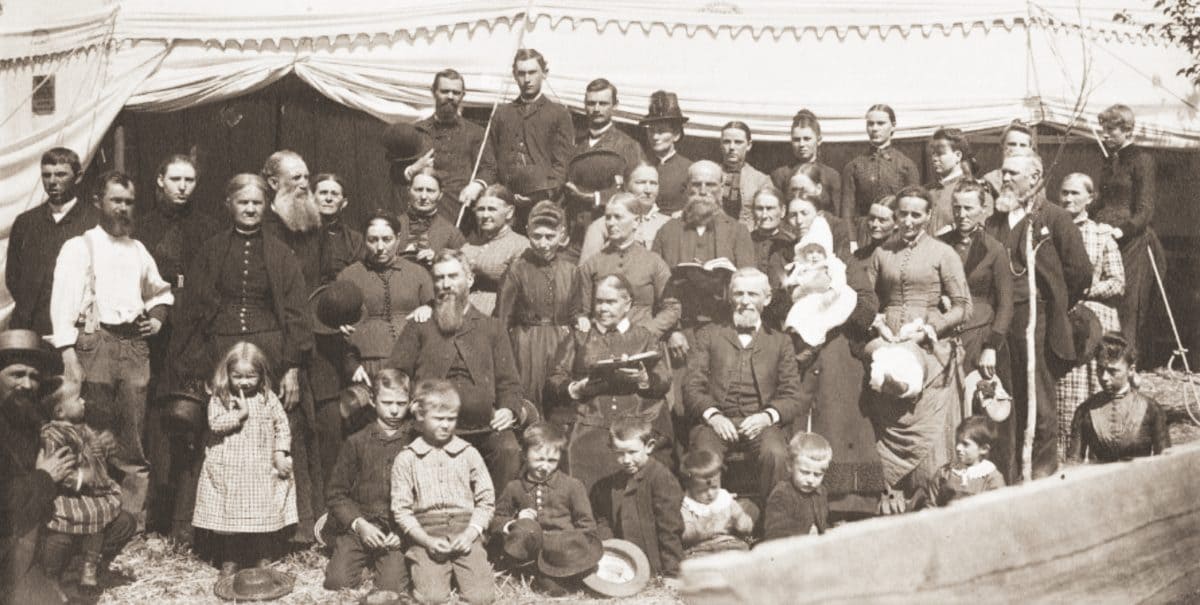 Fig.1 Ellen White in Reno, Nevada, at Passover time, May 24-June 4, 1888
Let all who possibly can, attend these yearly gatherings. Return unto the Lord, gather up the rays of light that have been neglected, comply with the conditions laid down in the Word of God, and then by faith claim the promises. Jesus will be present, and He will give you blessings which all the treasures you possess, be they ever so valuable, would not be rich enough to buy. A strong, clear sense of eternal things and a heart willing to yield all to Christ are of inestimable value; in comparison with these, the riches and pleasures and glories of this world sink into insignificance. {Ms 8, 1882, par. 21}
In the days of Christ these feasts were attended by vast multitudes of people from all lands; and had they been kept as God intended, in the spirit of true worship, the light of truth might through them have been given to all the nations of the world.
With those who lived at a distance from the tabernacle, more than a month of every year must have been occupied in attendance upon these holy convocations. The Lord saw that these gatherings were necessary for the spiritual life of His people. They needed to turn away from their worldly cares, to commune with God, and to contemplate unseen realities.
If the children of Israel needed the benefit of these holy convocations in their time, how much more do we need them in these last days of peril and conflict! And if the people of the world then needed the light which God had committed to His church, how much more do they need it now! {6T 39,40}
At these yearly assemblies the hearts of old and young would be encouraged in the service of God, while the association of the people from the different quarters of the land would strengthen the ties that bound them to God and to one another. Well would it be for the people of God at the present time to have a Feast of Tabernacles—a joyous commemoration of the blessings of God to them. As the children of Israel celebrated the deliverance that God had wrought for their fathers, and His miraculous preservation of them during their journeyings from Egypt, so should we gratefully call to mind the various ways He has devised for bringing us out from the world, and from the darkness of error, into the precious light of His grace and truth.
With those who lived at a distance from the tabernacle, more than a month of every year must have been occupied in attendance upon the annual feasts. This example of devotion to God should emphasize the importance of religious worship and the necessity of subordinating our selfish, worldly interests to those that are spiritual and eternal. We sustain a loss when we neglect the privilege of associating together to strengthen and encourage one another in the service of God. The truths of His word lose their vividness and importance in our minds. Our hearts cease to be enlightened and aroused by the sanctifying influence, and we decline in spirituality. In our intercourse as Christians we lose much by lack of sympathy with one another. He who shuts himself up to himself is not filling the position that God designed he should. We are all children of one Father, dependent upon one another for happiness. The claims of God and of humanity are upon us. It is the proper cultivation of the social elements of our nature that brings us into sympathy with our brethren and affords us happiness in our efforts to bless others. {PP 540,541}
The forces of the enemies are strengthening, and as a people we are misrepresented; but shall we not gather our forces together, and come up to the feast of tabernacles? Let us not treat this matter as one of little importance, but let the army of the Lord be on the ground to represent the work and cause of God in Australia. Let no one plead an excuse at such a time. One of the reasons why we have appointed the camp-meeting to be held at Melbourne, is that we desire the people of that vicinity to become acquainted with our doctrines and works. We want them to know what we are, and what we believe. Let every one pray, and make God his trust. Those who are barricaded with prejudice must hear the warning message for this time. We must find our way to the hearts of the people. Therefore come to the camp-meeting, even though you have to make a sacrifice to do so, and the Lord will bless your efforts to honour his cause and advance his work. {BEcho December 8, 1893, par. 6}
(524) We see that the forces of the enemy are strengthening. The ministers in every place are making earnest efforts to oppose the truth, and more so in Wellington than in any place I ever visited. Everything is said to represent Seventh-day Adventists as few in number and inferior people without influence. Should we not on this occasion represent the believing rank and file to the best of our ability. Will not our brethren come up to the feast of tabernacles? How zealously should each one guard the way that leads to the city of God. {EA 112.6}
We see that the forces of the enemy are strengthening, and that the ministers in every place are making earnest efforts to oppose the truth, and more so in Wellington than any place I ever visited. Everything is said to present Seventh-day Adventists as only a few in number, and inferior in every respect, possessing little influence. And shall we not on this occasion represent the believing rank and file the very best that we possibly can? Will our brethren not come up to the feast of tabernacles? How zealously should every one guard the way that leads to the city of God! If we treat the work as an indifferent matter, and the army of the Lord is not on the ground to represent the cause and work in New Zealand, God will not be pleased with your neglect. Will you plead excuses, and at such a time? {Lt 8a, 1893, par. 4}
As if this great amount of writing and retyping on the subject of camp-meetings isnt't sufficient, Counsels to Parents, Teachers, and Students has two whole headings named "Holidays Unto God" and "How to Spend Holidays" (under section 9, "Recreation",) which deal with holiday keeping. Testimonies, vol. 2, chapter 69, talks of sacred convocations, and a large portion is repeated in the same volume, chapter 74. Remember that God does not repeat things that are of no great consequence.
Pamphlet 130 outlines true camp-meetings in 45 paragraphs; that's repeated in chapter 4 (titled "The Camp Meeting") of vol. 6 of the Testimonies for the Church.
I acknowledge that it seems that the SDA pioneers, including Ellen White, didn't observe God's feasts according to the Biblical calendar. The motive is obvious: they didn't have this light, because God didn't consider wise to restore these statutes then. These statutes must be restored in the time of the end,
as the prophet puts it. Now is the time for this new light to shine. This message about the feasts is given to rich and poor alike, with emphasis on the holiday rights that God gave to the poor. In Patriarchs and Prophets, at the end of chapter 51, titled "God's care for the poor", after expounding some statutes, including the Sabbatical and Jubilee years, sister White concludes:
If the law given by God for the benefit of the poor had continued to be carried out, how different would be the present condition of the world, morally, spiritually, and temporally! Selfishness and self-importance would not be manifested as now, but each would cherish a kind regard for the happiness and welfare of others; and such widespread destitution as is now seen in many lands would not exist.
The principles which God has enjoined, would prevent the terrible evils that in all ages have resulted from the oppression of the rich toward the poor and the suspicion and hatred of the poor toward the rich. While they might hinder the amassing of great wealth and the indulgence of unbounded luxury, they would prevent the consequent ignorance and degradation of tens of thousands whose ill-paid servitude is required to build up these colossal fortunes. They would bring a peaceful solution of those problems that now threaten to fill the world with anarchy and bloodshed. {PP 536}
'Therefore Let Us Keep the Feast'
In the next article of this series, we're going to give very technical instructions on how to determine the beginning of the Biblical days, months, years and other units of time. God's people need to press on now more than ever, and His calendar should serve this unifying purpose by accomodating them, regardless of their location on the earth. Once the people of God are perfectly synchronized to His calendar, mighty manifestations such as have not been witnessed since the day of Pentecost will be shown.
As we've already read in Luke 22:16, Jesus promised that he will not eat the passover until it be fulfilled in the kingdom of heaven.
He is preparing a feast for us in which He will participate, and its timing is not arbitrary. He has a perfect calendar in which the final events of this earth's history and the activities of the redeemed fit. None need be in ignorance of what's about to happen in the world. All can have a taste of sanctification if they just choose to walk in the statutes of the Lord.
Therefore let us keep the feast, not with old leaven, neither with the leaven of malice and wickedness; but with the unleavened bread of sincerity and truth. {1 Corinthians 5:8}